Where to Buy Expanded Metal Near Me: Supplier Types, Decision Rules, and RFQ Tips
The question "where to buy expanded metal near me" has several correct answers. The best source depends on how the mesh will be used. A hardware store may be fine for a small hobby panel. A steel yard may be right for a stock industrial sheet. A fabricator may be right when cutting and framing are needed. A manufacturer may be right when the project needs controlled geometry, finish, documentation, and repeat supply. The buyer should choose the supplier type before choosing the supplier name.
Nearness is helpful, but capability matters more as risk increases. A nearby seller with the wrong pattern is not really convenient. A manufacturer farther away may save time if it ships panels ready for installation. The decision rules below help turn a local search into a practical sourcing route.
Hardware stores and retail outlets
Retail outlets are useful for small, low-risk needs. They may carry small sheets or decorative panels that can be cut by hand tools. They are usually not the best source for certified material, heavy duty mesh, large sheet quantities, or custom finishes. The advantage is speed and accessibility. The limitation is specification depth.
Buy retail when the application is temporary, light, and flexible. Do not buy retail for load-bearing platforms, machine safety guards, corrosive environments, or projects that require matching panels. If the panel affects safety, move to a steel supplier, fabricator, or manufacturer.
Steel yards and service centers
Steel yards and service centers can be good sources for common stock sheets. They may carry carbon steel expanded metal in familiar sizes and patterns. Some can shear sheets or arrange delivery. Their inventory is useful for repair work and fabrication shops. The buyer should still confirm pattern, sheet size, material grade, finish, and condition before purchase.
This route is best when the job needs standard sheet quickly and your shop can handle cutting, deburring, finishing, and installation. It is less suitable when the project needs exact panel sizes, stainless control, coating consistency, or documentation.
Local fabricators
A fabricator can buy expanded metal, cut it, frame it, weld it, and turn it into a guard, door, shelf, cage, or platform component. This route is useful when the finished part matters more than the raw sheet. The fabricator should understand diamond orientation, edge safety, and finish sequence. If the panel will be galvanized after welding, fabrication and drainage details matter.
Ask the fabricator whether it sources mesh to specification or uses whatever is available. A good fabricator will request drawings and application details. If the mesh is visible or load-related, the fabricator may coordinate directly with a manufacturer for the correct pattern.
Manufacturers
A manufacturer is the right source when the project needs controlled mesh geometry, repeat production, custom sheet sizes, cut panels, finish coordination, documentation, export packing, or engineering support. Manufacturing supply is not always the fastest for one sheet, but it can be the fastest route to correct panels for a serious project.
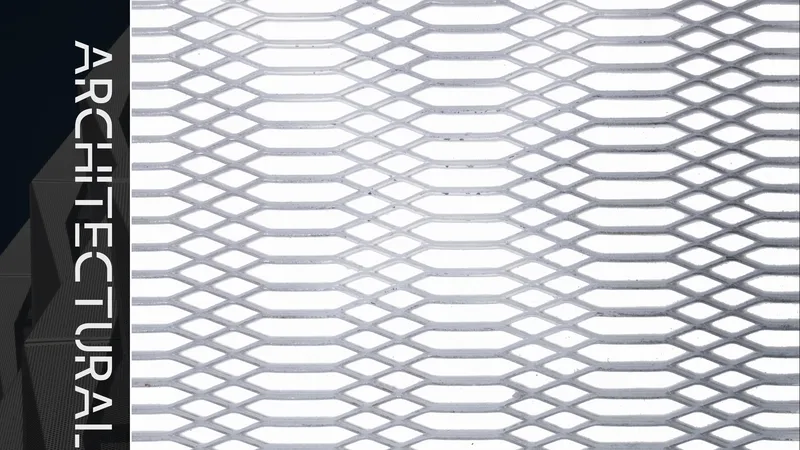
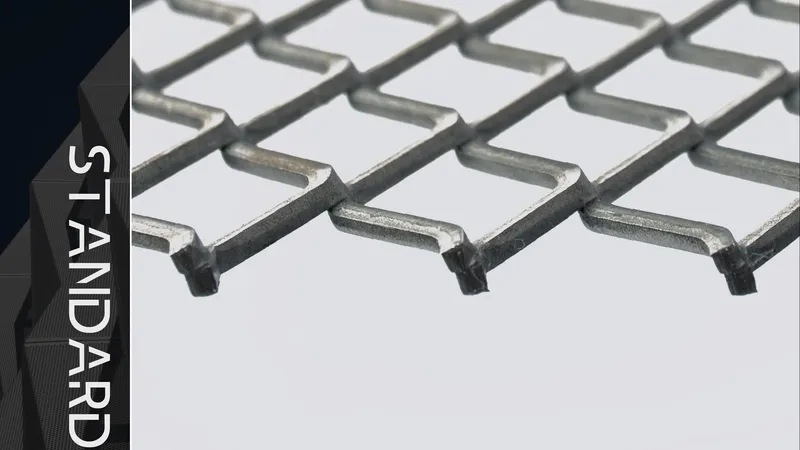
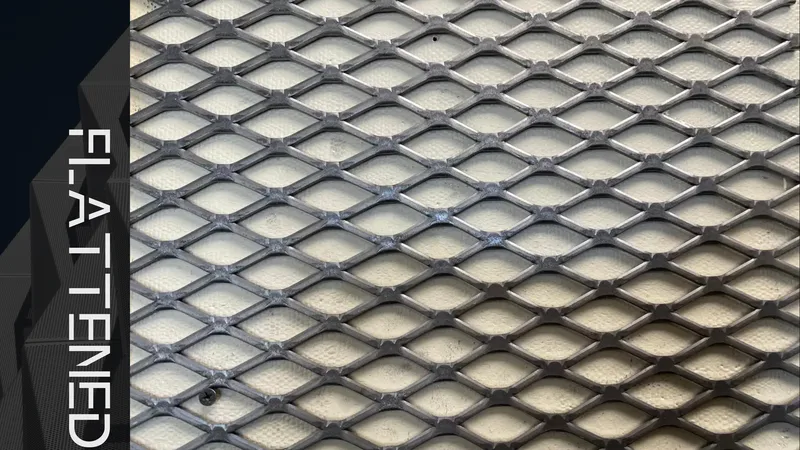
Use a manufacturer for standard expanded metal, flattened expanded metal, heavy duty expanded metal, micro expanded metal, and architectural expanded metal when the application needs more than shelf availability. Send drawings through contact when you need a quote that includes material, finish, cutting, and delivery.
Decision rules
Use retail for small flexible jobs. Use a steel yard for common stock sheets. Use a fabricator when the mesh must become a finished assembly. Use a manufacturer when pattern, finish, quantity, documentation, or repeatability matters. If the job has safety, corrosion, appearance, or schedule risk, move one level deeper in supplier capability than the cheapest search result suggests.
The rule is simple: the more consequences attached to failure, the more control you need over the supply route. A temporary cover can tolerate compromise. A public walkway or production guard cannot.
What to send in the RFQ
Send application, material, finish, pattern, sheet or panel dimensions, quantity, deadline, delivery location, and any drawings. Add photos if replacing an existing panel. State whether the mesh should be raised or flattened. State whether certificates are required. If you do not know the pattern, ask the supplier to recommend options based on use. A clear RFQ saves time for every supplier type.
For local searches, include location and delivery constraints. "Need pickup today" is different from "need delivered panels next month." Suppliers can respond better when urgency and destination are clear.
How to evaluate the answer
A strong answer includes exact product description, availability, lead time, price, inclusions, and limitations. A weak answer includes only a price. If the quote is for stock material, ask how it is stored and loaded. If the quote is for project panels, ask how panels are labeled and packed. If the quote is for stainless or coated mesh, ask how the surface is protected.
Supplier behavior during quoting often predicts order behavior. If details are handled carefully before purchase, they are more likely to be handled carefully during production and shipping.
Final recommendation
Where to buy expanded metal near me depends on risk. Start with the application, then choose the supplier type: retail, steel yard, fabricator, or manufacturer. Local access is useful, but the best source is the one that can deliver the correct mesh in the correct condition with the right documentation for the job.
Additional buyer notes
If several supplier types are available locally, start with the one whose process matches the end product. A fabricator is often better for assemblies; a manufacturer is better for controlled mesh.
For regional purchasing teams, maintain a source matrix that lists who can provide stock, cutting, finishing, certificates, and project packing.
A field-tested supplier selection sequence
First, decide whether the buyer needs material, a fabricated part, or a finished project package. This single question removes many bad matches. A retailer sells material. A fabricator sells a part. A manufacturer can sell controlled mesh and sometimes finished panels. Asking the wrong supplier type wastes time even if the supplier is nearby.
Second, call with a concise application statement. "We need a galvanized raised expanded metal panel for an outdoor maintenance platform" invites a technical answer. "Do you have expanded metal?" invites a yes or no that may not help. The application statement helps the supplier decide whether its inventory and capability fit.
Third, request proof before travel. Ask for a product label, close-up photo with scale, sheet photo, and quote description. If the seller cannot provide basic information remotely, decide whether the drive is still worth it. This step is especially useful when several local results compete for attention.
Fourth, choose the supplier based on the consequence of failure. A low-risk shop screen can come from the closest seller. A safety panel, stainless panel, or visible architectural screen should come from the source that can control specification and delivery. The higher the consequence, the more supplier capability matters.
Fifth, save the sourcing record. Local buying often fails at repeat orders because nobody records what worked. Keep supplier name, product description, photos, price date, and notes. The next buyer will thank you, and the organization will slowly build a reliable sourcing map.
Local source map for repeat buyers
For a regional purchasing team, map supplier capability before assigning the order. Mark which sources provide retail stock, steel-yard sheets, cutting, fabrication, finishing, certificates, project packing, and repeat supply. The closest source is useful for low-risk material; controlled capability matters more when safety, corrosion, appearance, or reordering is involved.
The central document should be a source map showing retail, steel yard, fabricator, and manufacturer capability by product form. It does not need to be complex, but it must be specific. Include the words the supplier should repeat back in the quote. If the quote returns with different words, stop and clarify. This habit prevents a common expanded metal problem: the buyer thinks the supplier understood the requirement while the supplier quoted the nearest available mesh. Written alignment is cheaper than correcting a bundle after it arrives.
This matters in maintenance, capital projects, machine guarding, architectural screens, and safety platforms. These applications may all use expanded metal, yet they place different value on open area, edge safety, corrosion resistance, appearance, stiffness, and delivery condition. A buyer who does not describe the operation forces the supplier to guess. A buyer who describes the operation gives the supplier a chance to recommend raised mesh, flattened mesh, heavy duty mesh, stainless steel, coating, or cut-to-size panels with a defensible reason.
The supplier should provide capability notes, sample records, approved patterns, and a contact route for engineered orders. Evidence does not need to slow the order. In many cases, a clear photo and a written line item are enough. For larger jobs, drawings, certificates, inspection photos, and packaging labels may be needed. The level of proof should match the level of risk. If a supplier refuses to provide basic evidence, the buyer should treat the quote as incomplete no matter how attractive the price looks.
The specific risk is that different branches or jobsites may buy different mesh under the same informal name. This risk is easy to overlook because expanded metal looks familiar. Most people can recognize the diamond pattern, so they assume the details are interchangeable. They are not. Strand dimensions, diamond direction, material grade, finishing route, and edge condition can change how the panel behaves. A good supplier helps expose those details before purchase; a weak supplier leaves them for the buyer to discover later.
A good local source list is more than addresses. It should show capability, proof, limitations, and the type of job each supplier can safely handle. Keep that map current, and future buyers can choose quickly without confusing convenience with suitability.
Final specification check
Before the purchase is closed, read the product description aloud as if the receiving team, installer, and future reordering buyer were in the room. If any person would still need to ask what material, finish, pattern, size, orientation, or delivery condition is intended, the description is not complete. This final check is quick, but it catches many expensive gaps. It also creates a clean internal record because the requirement is explained in practical purchasing language rather than left as a loose keyword. Clear purchasing language keeps the next decision faster and safer.