Expanded Metal 4x8 Sheet Near Me: What to Check Before Buying a Standard Sheet
The phrase "expanded metal 4x8 sheet near me" sounds specific, but it is still incomplete. A 4 ft by 8 ft sheet describes the outside rectangle, not the mesh. Inside that rectangle can be a light decorative pattern, a common standard industrial sheet, a flattened panel, or a heavy duty product that behaves very differently under load. The 4x8 size is popular because it fits many racks, trucks, shop tables, and cutting plans. It should be treated as a format, not as a specification.
Buyers often ask for 4x8 because they need speed. That is understandable. The format is familiar in North America and easy for fabricators to nest into guards, shelves, screens, stair panels, and patch repairs. But expanded metal has direction. The long way of diamond and the long way of the sheet are not just visual details; they affect stiffness, support behavior, and how panels line up. Before you buy the nearest 4x8 sheet, confirm whether the pattern and orientation suit the job.
The six numbers that matter more than 4x8
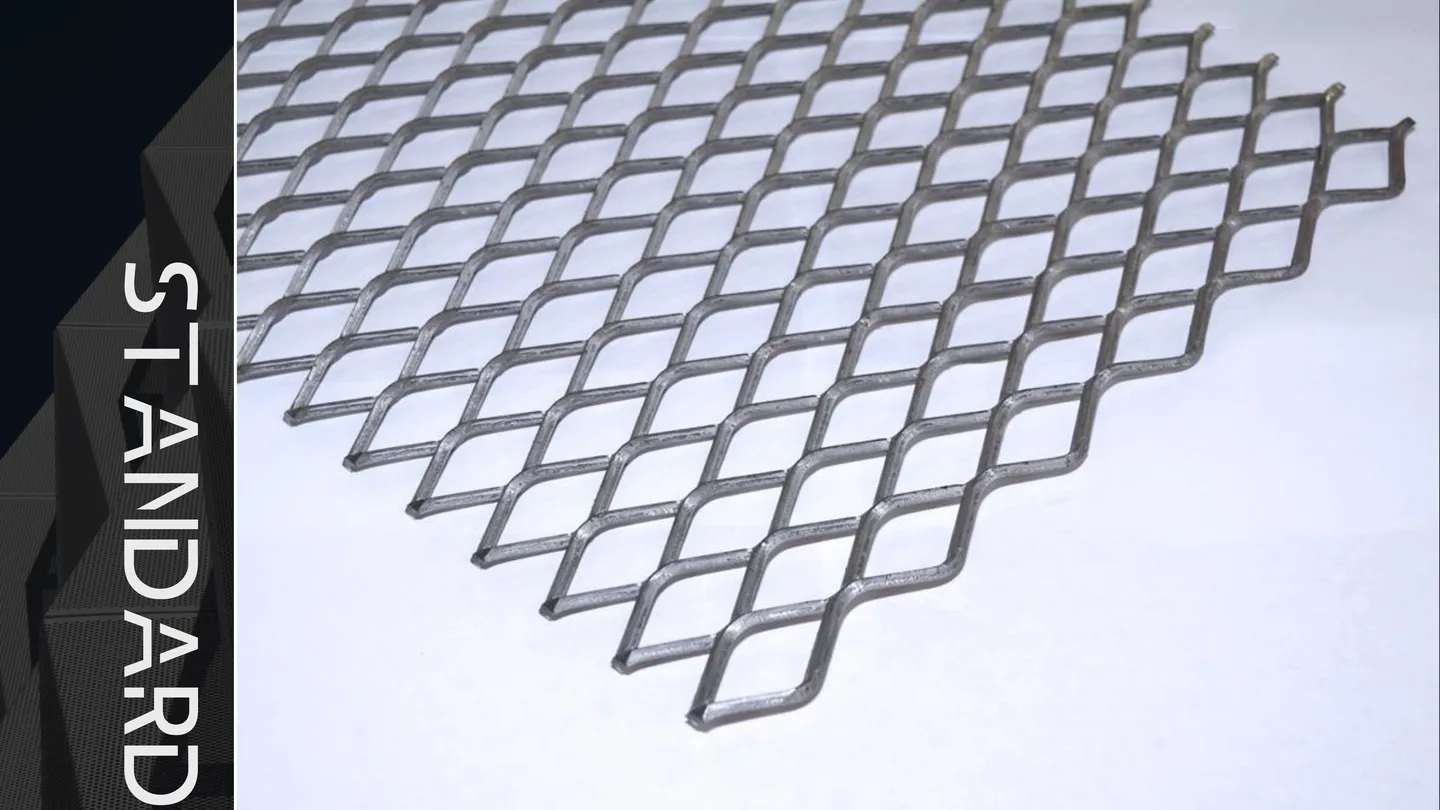
A useful 4x8 inquiry includes six numbers: SWD, LWD, strand width, strand thickness, overall thickness, and open area. SWD and LWD describe the diamond size. Strand width and thickness describe the metal left after slitting and expanding. Overall thickness matters because raised mesh is thicker than the base metal. Open area affects airflow, drainage, visibility, and weight. These numbers make two 4x8 sheets comparable.
If a supplier cannot provide those values, ask for a product sheet or photo beside a ruler. Common pattern names can be helpful but are not universal. A "3/4 inch #9" description may mean one thing in one market and something slightly different in another. For engineered work, use dimensions and tolerances, then connect the selection to standard expanded metal or heavy duty expanded metal depending on the load and service condition.
Raised, flattened, and why carts care
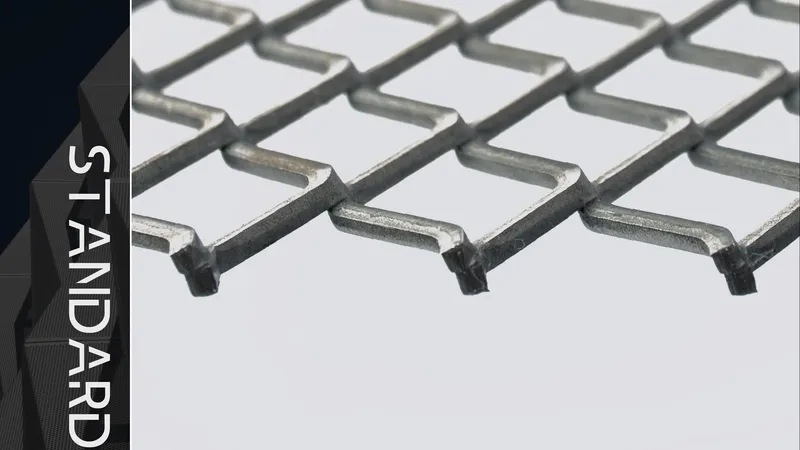
Raised expanded metal keeps the three-dimensional strand profile created by expansion. It can provide grip and stiffness, which is useful for platforms, catwalks, and certain guards. Flattened expanded metal is passed through rolls after expansion. The result is smoother, thinner, and often easier to use where hands, carts, sliding parts, or appearance are important. Both can be sold as 4x8 sheets, and both can be correct in different situations.
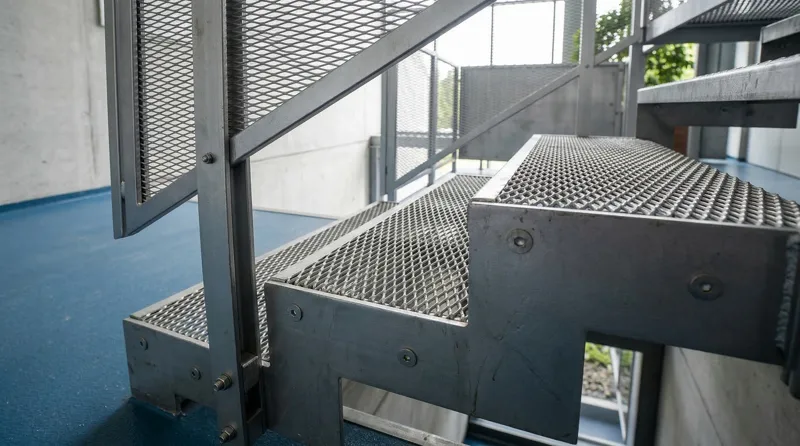
The mistake is buying raised mesh when the application needs a smooth face, or buying flattened mesh when the application needs aggressive traction. A maintenance shop replacing a stair landing should think differently from a sign shop making a decorative panel. If the sheet will become an enclosure door, flattened mesh may reduce snagging. If it will become a drainage walkway, raised mesh may be preferable. The category pages for flattened expanded metal and heavy duty expanded metal help clarify that decision before ordering.
Handling a 4x8 sheet without damaging it
A 4x8 expanded metal sheet is open, flexible, and sharp at cut edges. It should not be dragged across concrete or lifted from one corner. Thin patterns can bend. Coated sheets can rub and lose finish. Raised strands can catch on each other in a stack. Ask how the local seller stores and loads sheets. If the material is already bent, rusty, or loosely stacked, the convenience of nearby inventory may not be worth it.
For shop pickup, bring gloves, edge protection, and a vehicle that supports the sheet over enough area. For delivery, ask whether the bundle is strapped to a pallet or skid. If the sheet is galvanized, avoid standing water during storage. If the sheet is stainless, avoid contact with carbon steel debris that can contaminate the surface. These handling details are not glamorous, but they preserve the value of the material you just bought.
Cutting plans and waste
The 4x8 format becomes economical when the cut plan respects diamond orientation and edge requirements. If panels need framed borders, leave enough material for clean trimming. If several panels must align visually, keep orientation consistent. If the edge will be exposed to hands, plan deburring or edging. Randomly cutting a 4x8 sheet can create sharp points, weak corners, and mismatched diamonds.
For repeated production, ask whether a custom sheet size would reduce waste. Sometimes a made-to-order sheet or pre-cut panel is cheaper than buying standard 4x8 sheets and throwing away offcuts. This is especially true when the panel dimensions are awkward or when every piece needs the same finished edge. A good supplier can compare stock-sheet cutting with custom production and show where the material goes.
Comparing local prices
Local 4x8 prices can vary because they may include different materials, different finishes, and different levels of handling. A bare carbon steel sheet, a galvanized sheet, and a stainless sheet should not be compared as if they are the same product. Ask whether the quoted price includes tax, loading, cutting, edge work, and delivery. Ask whether a certificate is available. Ask whether the sheet has been stored indoors.
The lowest local price is attractive for a temporary use. For a permanent installation, the better quote is the one that states the geometry and service condition clearly. If the order may repeat, request a written description that your future buyer can reuse. That record is worth more than a vague receipt.
A 4x8 sheet buying sequence
First, define the application. Second, decide raised or flattened. Third, select material and finish. Fourth, confirm pattern dimensions. Fifth, check sheet orientation and edge needs. Sixth, compare pickup, delivery, or manufacturing supply. Seventh, inspect before acceptance. This sequence takes only a few minutes, but it prevents the most common mistakes in "near me" purchases.
When a project grows beyond a few sheets, move from retail language to specification language. Use drawings, a panel schedule, and a quote package. The engineering documents area can support internal review, while contact is the practical route for confirming whether stock sheets or custom panels best match the job.
Final recommendation
A 4x8 expanded metal sheet is convenient because the format is familiar, not because it is universally correct. Buy it locally when the pattern, material, finish, orientation, and condition match your need. For structural, stainless, coated, or repeated work, treat 4x8 as one option among several. The best sheet is the one that fits the application with the least rework, not simply the one closest to your truck.
Additional buyer notes
If the 4x8 sheet will be transported flat, support it across its width. If it is transported upright, secure it so the sheet cannot twist under its own weight.
For repeated fabrication, record the yield from each 4x8 sheet. The yield record is often the easiest way to justify custom panel supply later.
When the standard size helps and when it hurts
The 4x8 format helps when the shop can cut several parts from one sheet with minimal waste. For example, a fabricator making rectangular machine guards may nest two or four panels efficiently and keep diamond direction consistent. The sheet is easy to store, easy to quote, and familiar to the crew. In that case, searching locally for a 4x8 sheet is a practical decision as long as the mesh pattern is correct.
The same format hurts when the required panels are just slightly larger than the available yield or when orientation forces awkward offcuts. A buyer may order extra sheets to compensate, then discover that the total cost exceeds a custom-size or cut-to-size order. Expanded metal waste is not always reusable because the offcut may have the wrong diamond orientation or exposed edges. A simple nesting sketch before purchase can prevent this.
Another issue is coating sequence. If a shop buys bare 4x8 sheets, cuts panels, and then sends parts for galvanizing or powder coating, the timing and minimum batch charges may change the economics. If the shop buys prefinished sheets and cuts them afterward, cut edges may need touch-up. The right route depends on quantity, finish expectation, and where the panel will be installed.
For buyers who reorder often, a 4x8 sheet should be treated as an inventory item with a full description. Save the pattern, material, finish, supplier, photo, and actual measured thickness. The next purchase will be faster, and the company will not be dependent on a vague memory of what was available at a nearby yard.
A worksheet for 4x8 sheet decisions
For a shop cutting several panel sizes from standard sheets, the buying file should start with a cutting plan. List the finished panel sizes, diamond direction, exposed edges, trim allowance, finish route, and packing method. This prevents the team from buying a sheet that is nominally 4x8 but difficult to cut cleanly or repeat on the next order.
The central document should be a nesting sketch showing each panel, the long way of diamond, trim allowance, and leftover material. It does not need to be complex, but it must be specific. Include the words the supplier should repeat back in the quote. If the quote returns with different words, stop and clarify. This habit prevents a common expanded metal problem: the buyer thinks the supplier understood the requirement while the supplier quoted the nearest available mesh. Written alignment is cheaper than correcting a bundle after it arrives.
This matters in guard panels, trailer repairs, rack inserts, and small platform covers. These applications may all use expanded metal, yet they place different value on open area, edge safety, corrosion resistance, appearance, stiffness, and delivery condition. A buyer who does not describe the operation forces the supplier to guess. A buyer who describes the operation gives the supplier a chance to recommend raised mesh, flattened mesh, heavy duty mesh, stainless steel, coating, or cut-to-size panels with a defensible reason.
The supplier should provide measured diamonds, flatness check, bundle condition, and a saved supplier description. Evidence does not need to slow the order. In many cases, a clear photo and a written line item are enough. For larger jobs, drawings, certificates, inspection photos, and packaging labels may be needed. The level of proof should match the level of risk. If a supplier refuses to provide basic evidence, the buyer should treat the quote as incomplete no matter how attractive the price looks.
The specific risk is that the familiar 4x8 format may hide poor yield, wrong diamond direction, or edge conditions that require extra labor. This risk is easy to overlook because expanded metal looks familiar. Most people can recognize the diamond pattern, so they assume the details are interchangeable. They are not. Strand dimensions, diamond direction, material grade, finishing route, and edge condition can change how the panel behaves. A good supplier helps expose those details before purchase; a weak supplier leaves them for the buyer to discover later.
Before approving a 4x8 purchase, confirm how the sheet will be cut, carried, stored, and reordered. If the finished panel size, direction, finish, or edge condition is still unclear, the sheet description is incomplete. A few minutes of checking prevents scrap, unsafe edges, and mismatched replacement panels.